The Reformation in Iceland 1537–1565

The Birth of an Early Modern State

A scholarly study of the Protestant Reformation in Iceland — examining how this religious and political transformation gave birth to an early modern Icelandic state under Danish royal authority.

View the full interactive site

  • The Players
  • The Uprising
  • Iceland in the Age of the Reformation
  • The Birth of an Early Modern State
  • About the Author

The Players

King versus The Last Bishop

King Christian III of Denmark & Norway, 1503–1559

King of Denmark and Norway, Christian III was determined to bring the Protestant Reformation to all his territories, including Iceland.

Denmark was an elective monarchy in the Middle Ages. The king was elected by the Danish and Norwegian Councils of the Realm. When Frederick I, King of Denmark and Duke of Schleswig-Holstein, died in 1533, the royal election was delayed. This created a power vacuum, which led to a peasant uprising in Jutland and the Counts' Feud. In that war, his son, Christian III, emerged victorious. He was a devout Lutheran and was elected king in 1534.

As a young man, Christian III attended the Imperial Diet of Worms in 1521 and had met Luther there. The roots of his evangelical faith are most likely found in the Danish nobility's opposition to the clerical power of the Catholic Church and in his immediate surroundings. His queen, Dorothea of Saxe-Lauenburg, as well as his chief advisors, Johan von Rantzau and Wolfgang von Utenhof, were Lutheran.

During the Counts' Feud, Duke Christian could count on the support of the princes of Saxony, Lüneburg, Hesse, Pomerania, Prussia, and Brandenburg, whether for religious-political reasons or due to personal ties. His friendship with Landgrave Philip of Hesse proved especially advantageous. Frederick I and Philip had formed an alliance as early as 1532. This friendship and its obligations passed on to Christian III after his father's death.

The Landgrave advised him to make the nobility dependent on him and keep them indebted to him. For carrying out the Reformation, he recommended appointing a reformer from Wittenberg to his council, such as Luther, Melanchthon, or Bugenhagen. The Landgrave also urged him to reopen the university.

Christian III's strongest military supporters were the Holstein knights led by Johan von Rantzau. He could also rely on the evangelical nobility in Denmark and on the support of Johan Friis, who later became his chancellor. Christian III also had access to the financial market in Kiel, which was extremely important to him.

The Catholic bishops in Denmark were arrested, and church and monastery properties were confiscated, along with precious metals from churches and monasteries. With these funds, Christian III was able to pay the wages owed to his German mercenaries. The same process occurred in Norway and Iceland.

Bishop Jón Arason — Last Catholic Bishop of Iceland, approximately 1484–1550

The last Catholic bishop of Iceland, Jón Arason stood as the final defender of the old faith against the forces of Protestant reform.

Bishop Jón Arason (approximately 1484–1550) probably came from a respectable family. His uncle was Abbot Einar Ísleifsson at Munkaþverá Monastery, who presumably helped him train as a priest. His wife was Helga Sigurðarsdóttir, a woman from a good family.

The bride and groom entered into a marriage contract, and six children were born from this union, whom Bishop Jón adopted so that they would be eligible to inherit.

Bishop Jón was not only a man of God, but also a clan chief, a capable manager and a ruthless power-hungry man; his family policy had dynastic traits. At the end of his life, he and his children owned vast estates and defied the Danish king.

The Uprising

Of the Bishop Against the King

The dramatic confrontation between religious authority and royal power that would reshape Iceland forever.

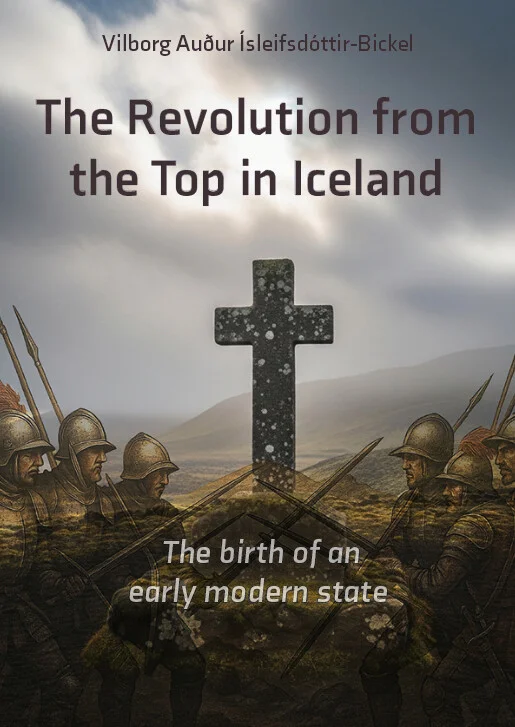
Jón Arason, Bishop of Hólar, held office from 1524 to 1550. In the summer of 1541, he did not ride to the Althing, having heard that the King of Denmark had sent two warships with 200 men to Iceland, to have the people swear oaths of loyalty and enforce the Reformation by force. This was the first time that a foreign army set foot on Iceland. At the Althing, the new Church Ordinance of 1537 was accepted.

In the following years, Superintendent Gizur Einarsson in the Diocese of Skálholt implemented the rules of the Ordinance in his bishopric, which was not well received by the public. In the Diocese of Hólar, people adhered to the Catholic faith. Between Bishop Jón and the leaders in the Diocese of Skálholt, a 'modus vivendi' was established.

When Gizur Einarsson died in 1548, Bishop Jón considered himself responsible for the Diocese of Skálholt, as he was the only properly elected bishop in the country. He had Gizur's successor, Martein Einarsson, the superintendent, arrested and brought to Hólar. He excommunicated all Lutheran leaders and began to restore the Catholic faith.

In the summer of 1550, Bishop Jón rode with his sons, Björn and Ari, to the Althing and then to Skálholt, where he reconsecrated the Cathedral and appointed his son Björn as procurator of the bishopric. He demanded oaths from the clergy that they would remain loyal to the Catholic faith and the ancient Icelandic laws.

The monasteries at Viðey and Helgafell had been taken for secular use. He visited these monasteries, expelled the new masters, and reinstated the monks.

In September 1550, the king's man, Daði Guðmundsson, captured Bishop Jón and his sons, Ari and Björn, at the strategically important location of Sauðafell and transported them to Skálholt. He feared that fishermen from the north of Iceland, who came to fish at Snæfellsnes, would rescue them. In Skálholt, people also feared the northern fishermen. The councilor of the seat, Jón Bjarnason, decided that the axe and the ground would best contain them.

On November 7, 1550, Bishop Jón and his sons were beheaded in Skálholt. In the spring of 1551, the King of Denmark sent several warships to Iceland to suppress the power of Bishop Jón, his family, and followers, and to have the people of northern Iceland swear oaths of loyalty. The Diocese of Hólar was converted to Lutheranism.

Iceland in the Age of the Reformation 1537–1565

Bishops, Priests, and Monks

The two episcopal sees, Skálholt and Hólar, were the main centers of power in the country. There were cathedrals there, the largest buildings in Iceland. The Icelandic bishoprics were under the archbishopric in Trondheim. In theological matters, Icelandic clergy sought advice from the archbishop and the cathedral chapter in Trondheim.

The bishoprics were wealthy in landed property and were the largest enterprises in the country, powerful engines in economic affairs. They owned seaworthy ships that sailed to Norway and fishing boats along the coast. To secure building timber, the Skálholt see owned forest land in Björgvin. When times grew difficult, the bishoprics carried out banking activities; church silver could be mortgaged. At the Althing, the bishops had great influence and held the Church's judicial authority.

Various prelates managed administration, church affairs, and liturgy at the bishoprics. Young men went there to study and also worked as scribes or as the bishop's bodyguards. The secular administration of the bishoprics was in the hands of the steward and the deputies of the bishopric. The deputies managed large farms along with their tenant farms.

To study for priesthood, young men had to learn under educated priests, abbots, or monks. Church services were sung in Latin, and often it was enough to know the liturgical texts in Latin by heart and to administer the sacraments. For a time, there were two hospitals in the country for poor and sick priests.

In Iceland, priests could take women as partners, but they could not enter into a church marriage. The couples made a mutual contract. Bishop Jón Arason, for example, had six children who were raised. At a bishop's consecration, the bishop-elect had to separate from his wife. After the Reformation, priests' marriages became lawful.

There were nine monasteries in the country, two of them convents for nuns, which were important educational centers for women. These monasteries were rich in land and were powerful economic forces in their regions. Schools and scriptoria operated there, and the monasteries took in elderly people who could pay for their upkeep—often with land.

Wealthy church estates were important steps in the clergy's hierarchy of honor. These estates came with many tenant farms and rights, and therefore income, which strengthened the authority of the priests who held them. The archbishop allocated the richest estates, while the Icelandic bishops assigned the smaller ones. At the largest estates, there were often several priests at work, whether in writing, teaching, or liturgical functions.

Poor Relief

The tradition of poor relief in Iceland has a long history. In the year 1096, the tithe was made mandatory. At this turning point, the Church—which fundamentally stood outside the kinship-based social structure—gained a stable financial foundation. Prior to this, the clan or extended family had the obligation to support their poor, according to the Grágás (Grey Goose Laws). Bishops were regarded as the fathers of the poor.

Bishops, churches, and priests were exempt from taxes. The tithe was divided into four parts: the bishop's tithe, the priest's tithe, the church tithe, and the poor tithe. The hreppar—administrative units consisting of 20 tax-paying farms—distributed the tithe. The aid distributed included food, clothing, shoe leather, and overnight lodging. The movement of itinerant paupers (húsgangsmenn) followed established rules. Anyone who lacked sveitfesti (legal residency and support rights within a district) had no entitlement to this assistance.

Poor relief also took various other forms. There were the so-called kristfjárjarðir ('Christ-money lands'), donated by charitable individuals for the support of the poor. Tenants operated the farms on these lands and, in return, cared for poor or disabled people.

On certain farms, it was customary to give the milk from specific cows or ewes to the poor. On particular holidays, the poor received one-fifth of all catches, with whale meat being the most significant contribution. In the wills of wealthy farmers and clan chieftains, it was often stated that poor relatives should have refuge in their old age on the main farm (höfuðból) owned by the family.

At the bishoprics, there was a guest steward who cared for visitors, pilgrims, and the poor. During major festivals—such as before Christmas and during Lent—a certain number of poor people were given food and shelter. On Michaelmas, food, vaðmál (homespun wool cloth), shoe leather, and livestock were distributed at the bishoprics with great generosity.

The monasteries also attracted the poor, operating according to Christian ideals of charity. They supported próventufólk, elderly individuals who paid for lifelong care—often through land contributions. Recent archaeological excavations indicate that hospitals were also operated at these monasteries.

The new political structure and religious doctrine that came with the Reformation brought this entire system to an end. The king seized the monasteries' landholdings and the best fishing estates belonging to the Skálholt see on the Reykjanes peninsula. The number of vagrants soon became unmanageable.

After the Reformation, the plan was to build a hospital in each quarter of the country. The king, however, found this too costly. In the spring of 1556, a royal letter stated: 'It is His Majesty's view that hospitals shall not be built in Iceland as long as poor people can wander the country and find sustenance wherever it is easiest to obtain it.' This is one of the most brutal statements in Icelandic history.
The Birth of an Early Modern State

The Transformation

The restructuring of the Danish state and the Reformation hit medieval Catholic Icelandic society like a tsunami. This society had developed over 500 years and created remarkable institutions such as the Althing, the bishoprics, large and small benefices, and nine monasteries, whose scriptoria produced cultural assets such as the written saga. Politically and economically, Icelanders were oriented towards Norway.

The ecclesiastical institutions were not only responsible for Christian teaching and liturgy; they were the most important economic drivers and indispensable for the care of the poor alongside the care provided by the municipalities: there was a firm belief in the value of good works for the salvation of the soul. The Church Ordinance of 1537, or the constitution, provided for poor boxes in urban churches as sufficient for the care of the poor, because the ordinance was tailored to an urban society. Iceland had an agrarian society, and for the next 300 years there were no cities in sight.

Political power was in the hands of the bishops and the most powerful landowners. However, the problem of enforcing the law remained unresolved and was probably unsolvable in this conflict situation. This medieval society was confronted by the reformist forces of the Danish king, who was able to send military forces to Iceland, which was a historical novelty. The archaic system in Iceland had no way of countering this power.

Bishop Jón Arason and his clan had to bow down. The Icelandic economy was geared to the needs of the Danish royal power, which led to bitter poverty among the Icelandic population. The religious conversion was painful, and it was uncertain whether the Bible and theological writings of German origin could soon provide comfort.

It is also questionable whether the transformation, which can be attributed to the Reformation and the early modern state, was not rather a destruction of the reasonably functioning medieval society of Iceland. It was certainly not a gain.

About the Author & Colloquium at UCL

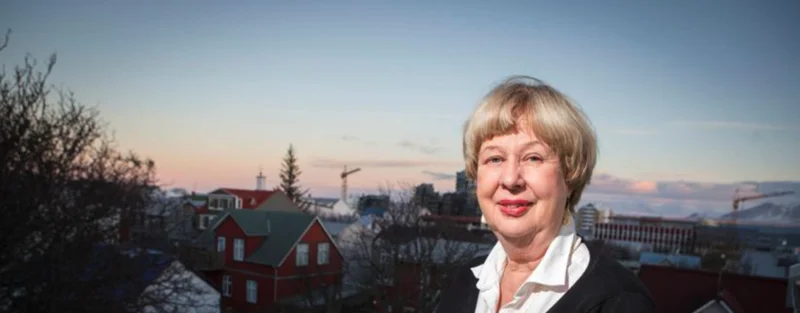
Vilborg Auður Ísleifsdóttir-Bickel (Dr. phil.) is a historian who has dedicated her research to the Reformation in Iceland. She was born in Reykjavik in 1945 and studied History at the Universities of Reykjavik and Mainz. Her work on the Reformation in Iceland was awarded a doctorate in Mainz in 1995.

Auður Ísleifsdóttir-Bickel is renowned for her research examining the introduction of the Reformation in Iceland from 1537 to 1565, shedding light on the cultural and economic consequences as well as the challenges of poor relief following the dissolution of the monasteries.

Retrospective: Reformation Studies Colloquium at UCL (April 2026)
At the beginning of 2025, University College London (UCL) announced the "Reformation Studies Colloquium," scheduled for April 2026, and issued a call for papers. The author was invited to present a paper on "Poor Relief in Medieval and Early Modern Iceland"—a particularly exciting opportunity, as poverty remains a relatively under-researched field in this context.

The colloquium was excellently organized and featured a wide range of diverse topics. Most of the participants came from England and Scotland, and the presentations reflected the multifaceted nature of the Reformation within those societies. Beyond historical analysis, it was fascinating to see the inclusion of various literary and art-historical perspectives as well.

© 2025 Website by www.zimmermann-design.de — Jörg Zimmermann.

Privacy Policy